
Table of Contents
Zygomatic implants are long dental implants anchored in the cheekbone (the zygoma) instead of the upper jawbone. They are used when the upper jaw has lost so much bone that normal implants cannot be placed, often after years of wearing dentures, and they can avoid months of bone grafting. At Soraca Med in Antalya, zygomatic implants start from €1,990 per implant. A large systematic review published in 2022 reported success rates of around 96 to 98 percent, depending on follow-up time. This guide explains who needs zygomatic implants, how the surgery works, what affects the cost and how they compare with All-on-4 and standard implants. Every treatment plan at Soraca Med is reviewed by our dentist, Ertan Yerlikaya.
Zygomatic Implants at a Glance
| Item | Typical detail |
| What they are | Long implants anchored in the cheekbone |
| Used for | Severe bone loss in the upper jaw |
| Number per jaw | Usually 2 to 4, often combined with standard implants in the front |
| Starting price at Soraca Med | From €1,990 per implant |
| Anesthesia | Usually general anesthesia or deep sedation |
| Temporary teeth | Often fixed temporary teeth within days |
| Final teeth | After healing, usually on a second trip |
| Reported success rates | About 96 to 98 percent in a 2022 systematic review |
What Are Zygomatic Dental Implants?
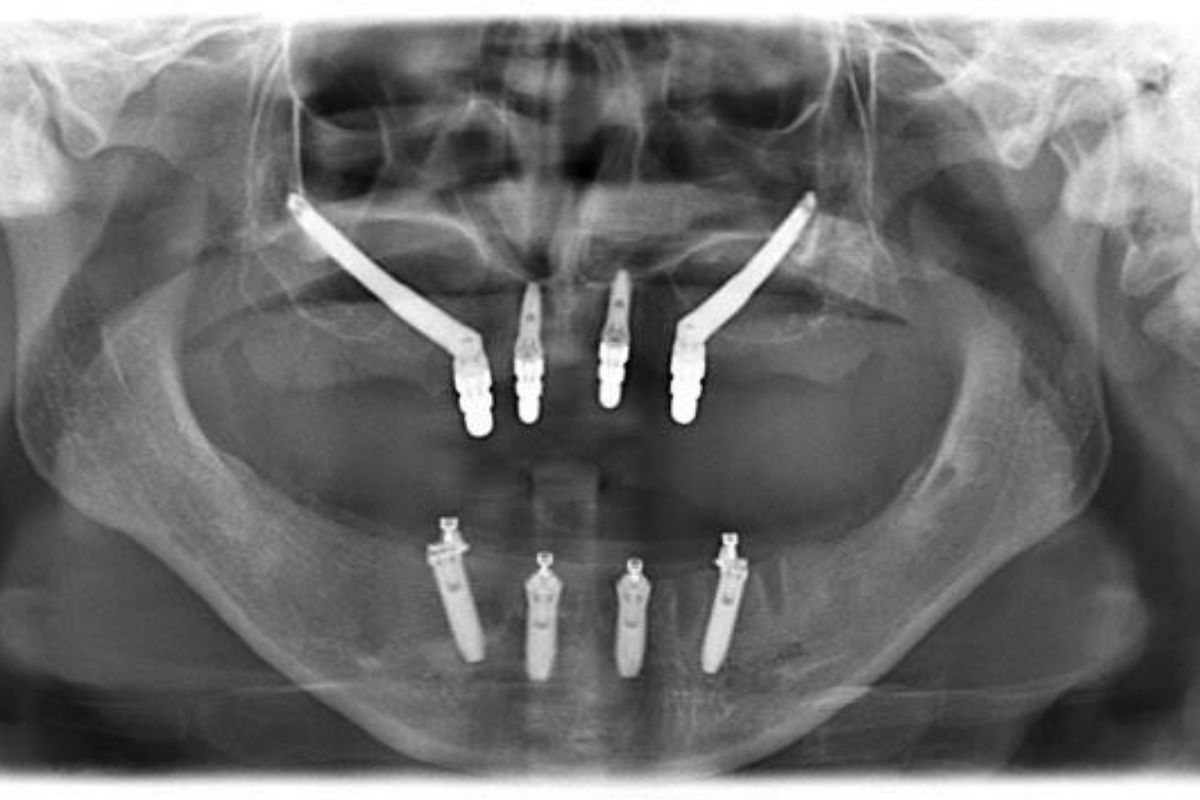
A standard dental implant is about 8 to 13 millimetres long and needs enough jawbone around it. When the upper jaw has shrunk, especially at the back near the sinuses, there may be too little bone. A zygomatic implant is much longer, typically 30 to 50 millimetres, and passes from the upper jaw to the dense bone of the cheekbone. The cheekbone does not shrink like the jaw after tooth loss, so it gives very strong support.
Zygomatic implants are almost always used in the upper jaw. They are usually combined with standard implants in the front of the jaw, or used as four zygomatic implants (“quad zygoma”) when there is very little bone anywhere in the upper jaw. Read more on our zygomatic implants treatment page.

Who Is a Good Candidate for Zygomatic Implants?
Zygomatic implants are usually considered for patients who:
- Have severe bone loss in the upper jaw shown on a 3D scan
- Have worn upper dentures for many years and want fixed teeth
- Have been told they need extensive bone grafting or sinus lifts
- Have had failed implants or failed bone grafts in the upper jaw
- Have lost bone after injury, illness or cancer treatment
The 2022 systematic review describes severe atrophy of the upper jaw and reconstruction after cancer surgery as the main indications. Zygomatic implants are an advanced procedure, so planning with a 3D scan and an experienced surgical team is essential. Not every patient with missing upper teeth needs them; many can be treated with standard implants or All-on-4.
Zygomatic Implants vs All-on-4 vs Traditional Implants
| Traditional implants | All-on-4 | Zygomatic implants | |
| Anchored in | Jawbone | Jawbone, back implants tilted | Cheekbone (with or without front jaw implants) |
| Bone needed | Good bone volume | Moderate bone at the front | Very little jawbone needed |
| Bone grafts | Sometimes | Often avoided | Usually avoided |
| Complexity | Standard | Moderate | Advanced |
| Soraca Med starting price | From €350 per implant | From €1,999 per jaw | From €1,990 per implant |
Your dentist chooses the simplest treatment that gives stable, long-lasting teeth. See All-on-4 dental implants and All-on-6 dental implants for comparison.
Zygomatic Implants vs Bone Grafting
For many patients with upper jaw bone loss, the traditional route is a sinus lift or bone graft, months of healing, and then implants. This can mean a year or more before fixed teeth. Zygomatic implants use existing bone in the cheekbone and often allow fixed temporary teeth within days. On the other hand, they are a more complex operation and need an experienced team. Your dentist explains both options after your scan.
| Bone grafting then implants | Zygomatic implants | |
| Number of surgeries | Often two or more | Usually one for the implants |
| Time to fixed teeth | Often many months | Often days, with temporary teeth |
| Complexity | Standard procedures, longer overall | One advanced procedure |
Zygomatic Implant Surgery: Step by Step
- Before travel: you send a recent panoramic X-ray or CT scan, or photos if you have none.
- 3D scan and planning: in Antalya, a CT scan is taken and the implant positions are planned digitally.
- Preparation: any remaining upper teeth that cannot be saved are removed.
- Anesthesia: the procedure is usually done under general anesthesia or deep sedation.
- Implant placement: zygomatic implants are guided through the upper jaw into the cheekbone, often together with standard implants at the front.
- Temporary teeth: where the implants are stable, a fixed temporary bridge is attached within days.
- Second trip: after healing, the final bridge is made and fitted.
Zygomatic Implants Recovery Time and Healing
| Time after surgery | What to expect |
| Days 1 to 3 | Swelling of the cheeks and around the eyes, bruising, soreness |
| First week | Swelling settles; soft diet with the temporary bridge |
| Weeks 2 to 3 | Most patients feel back to normal daily life |
| Months 3 to 6 | Healing and integration with bone; soft to normal diet as advised |
| After healing | Final bridge fitted on the second trip |
Follow your diet instructions carefully: the temporary bridge protects the implants, but very hard foods can overload them during healing. Do not smoke, as smoking increases the risk of complications.
Are Zygomatic Implants Safe? Pros and Cons
| Pros | Cons |
| Fixed teeth even with severe upper bone loss | Advanced surgery that needs an experienced team |
| Often avoids bone grafts and sinus lifts | Usually needs general anesthesia or deep sedation |
| Temporary fixed teeth often within days | More swelling than standard implants |
| High reported success rates | Specific risks such as sinusitis |
The 2022 systematic review reported that the most common complications were soft tissue problems around the implant, sinus inflammation (rhinosinusitis) and problems with the prosthesis. Careful planning, sterile surgery and good aftercare reduce these risks.
What Does the Research Say About Success Rates?
A systematic review in Dentistry Journal (2022), based on 196 publications, found cumulative success rates of about 98.5 percent in the first year, 97.5 percent at one to three years, 96.8 percent at three to five years and 96.1 percent after five years. The authors note that studies define “success” in different ways, so the numbers are a guide rather than a guarantee. For you, the most important factors are your health, your bone, the surgical team and your cleaning and check-ups afterwards.
Zygomatic Implants Cost in Turkey
| Item | Soraca Med starting price |
| Zygomatic implant | From €1,990 per implant |
| Standard implant (front of jaw, if combined) | From €350 to €950 by brand |
| All-on-4, one jaw (for comparison) | From €1,999 |
| All-on-6, one jaw (for comparison) | From €2,999 |
The total cost depends on how many zygomatic and standard implants you need, the type of final bridge, the anesthesia, the 3D scan and any extractions. Because every case is different, you receive a written plan with each item and its price after your scan has been assessed. See our dental treatment price list and our full mouth dental implants guide.
Why Are Zygomatic Implants Cheaper in Turkey?
In the UK and much of Western Europe, zygomatic implants are offered by relatively few specialist centres and often cost many thousands per jaw. In Turkey, lower clinic and staff costs and a large number of full-arch treatments for international patients bring the price down. The implant systems used are international brands. What you should check is the experience of the surgical team, the planning with a 3D scan and the aftercare.
How Many Days Do You Need to Stay in Turkey?
| Trip | What happens | Typical stay |
| First trip | Scan, planning, surgery, temporary bridge | Usually 7 to 10 days |
| Second trip | Final bridge and bite adjustment | Usually 5 to 7 days |
The first trip is a little longer than for standard implants, so the team can check healing and fit the temporary bridge before you fly.
Teeth in One Day with Zygomatic Implants: Is It Possible?
Often, yes. When the implants are stable at surgery, a fixed temporary bridge can be attached within a few days, so you leave Antalya with fixed teeth. This “immediate loading” is commonly used with zygomatic implants. The final, stronger bridge is made after the implants have healed.
Zygomatic Implants Before and After
Before treatment, many patients have a loose upper denture, a sunken upper lip and difficulty eating. After treatment, the fixed bridge restores chewing, supports the lip and cheeks, and removes the need for denture adhesive. Results depend on your facial structure, bite and the design of the bridge.
Caring for Zygomatic Implants
- Clean under and around the bridge daily with a water flosser or special brushes
- Attend regular hygiene visits at home
- Do not smoke
- Report swelling, pain, a blocked or runny nose on one side, or a loose bridge early
Why the Upper Jaw Loses So Much Bone
Bone in the jaw needs stimulation from tooth roots to stay strong. After teeth are lost, the bone that held them gradually shrinks. In the upper jaw this process is often faster, because the bone is softer and the maxillary sinuses above the back teeth tend to expand downward over time. Years of wearing a removable upper denture can add to the pressure on the gum and bone. The result can be a jaw that is too thin or too low for standard implants, especially at the back. Zygomatic implants bypass this problem by anchoring in the dense bone of the cheekbone.
Types of Zygomatic Implant Plans
| Plan | How it works | Typical situation |
| Zygomatic hybrid | Two zygomatic implants at the back plus two or more standard implants at the front | Bone loss mainly at the back of the upper jaw |
| Quad zygoma | Four zygomatic implants, two on each side | Severe bone loss across the whole upper jaw |
| Zygomatic rescue | Zygomatic implants after failed standard implants or bone grafts | Previous treatment did not work |
| Reconstruction | Zygomatic implants after surgery for tumours or trauma | Specialised reconstructive cases |
Planning With a 3D CT Scan
A 3D CT scan (CBCT) is essential before zygomatic implant surgery. It shows the thickness and shape of the cheekbone, the position of the sinuses, the nerves and the available bone in the front of the jaw. The surgeon plans the angle and length of each implant on the scan before surgery. This planning step is one of the most important factors in both safety and long-term success.
Bring These to Your Consultation
- A recent panoramic X-ray or CT scan, if you have one
- A list of all medicines, including blood thinners and osteoporosis medicines
- Information about previous dental surgery, implants or bone grafts
- Details of conditions such as diabetes, heart disease or sinus problems
- Photos of your smile and your current denture, if you wear one
Some medicines that affect bone, such as certain osteoporosis treatments, need special attention before implant surgery. Always tell your dentist about them.
Life With Fixed Teeth After Zygomatic Implants
| Before treatment | After treatment |
| A loose upper denture that may need adhesive | A fixed bridge that does not come out |
| A plate covering the palate | The palate is free, so taste and temperature feel more natural |
| Difficulty eating harder foods | A wider range of foods once healing is complete |
| A sunken upper lip | Better lip and cheek support |
| Worry about the denture moving when speaking | More confidence when talking and smiling |
Cleaning and Maintenance
A fixed bridge on zygomatic implants needs daily care:
- Brush the bridge twice a day with a soft brush.
- Clean under the bridge with a water flosser or special floss.
- Use interdental brushes around the implants where they meet the gum.
- Have professional cleaning and checks regularly, often every six months.
- Tell your dentist early about bleeding gums, swelling, a bad taste or sinus symptoms on one side.
Your Two Trips to Antalya
| Trip | Typical days | What happens |
| First trip | About 7 to 10 days | CT scan, planning, surgery under general anesthesia or deep sedation, fitting of a fixed temporary bridge |
| Healing at home | Usually several months | Soft diet at first, then normal diet as advised; check-ups by photos |
| Second trip | About 5 to 7 days | Final bridge made and fitted, bite adjusted |
Our Google Reviews


Our Bookimed Reviews
Our YouTube Videos
Frequently Asked Questions
How much do zygomatic implants cost in Turkey?
At Soraca Med in Antalya, zygomatic implants start from €1,990 per implant. The total depends on how many implants and what type of bridge you need.
Who needs zygomatic implants?
Patients with severe bone loss in the upper jaw who cannot have standard implants without extensive bone grafting.
Are zygomatic implants safe?
A 2022 systematic review reported success rates of about 96 to 98 percent. They are an advanced procedure, so an experienced team and careful planning are essential.
Do zygomatic implants hurt?
The surgery is done under general anesthesia or deep sedation. Afterwards, swelling and soreness for several days are common.
Can I get teeth in one day with zygomatic implants?
Often yes. When the implants are stable, a fixed temporary bridge is fitted within a few days.
How long do I need to stay in Turkey?
Usually 7 to 10 days for the first trip and 5 to 7 days for the final bridge.
What is the difference between All-on-4 and zygomatic implants?
All-on-4 uses four implants in the jawbone. Zygomatic implants are anchored in the cheekbone when there is not enough jawbone.
What are the risks of zygomatic implants?
The most common reported problems are soft tissue problems around the implant, sinus inflammation and problems with the bridge.
Can I have zygomatic implants if I was told I have no bone?
Often yes. Zygomatic implants are designed for patients with severe bone loss in the upper jaw. A 3D CT scan shows whether they are suitable.
Do zygomatic implants affect the sinuses?
The implants pass close to the sinus. Sinus inflammation is one of the reported complications, which is why careful planning with a CT scan matters.
Can zygomatic implants be used in the lower jaw?
No. They are anchored in the cheekbone and are used for the upper jaw only.
How long do zygomatic implants last?
With good cleaning and regular check-ups, they can last many years. Studies report high success rates beyond five years.
Sources and Medical Information
This guide is general patient information. The medical details are based on published research and patient guidance, including:
- Dentistry Journal (2022): Success rates of zygomatic implants, a systematic review
- Oral Health Foundation: Dental implants
- Cleveland Clinic: Dental implants
It does not replace an examination: your dentist decides which treatment is right for you. Prices are Soraca Med starting prices and are confirmed in your written treatment plan. Last updated: October 2026.