
Table of Contents
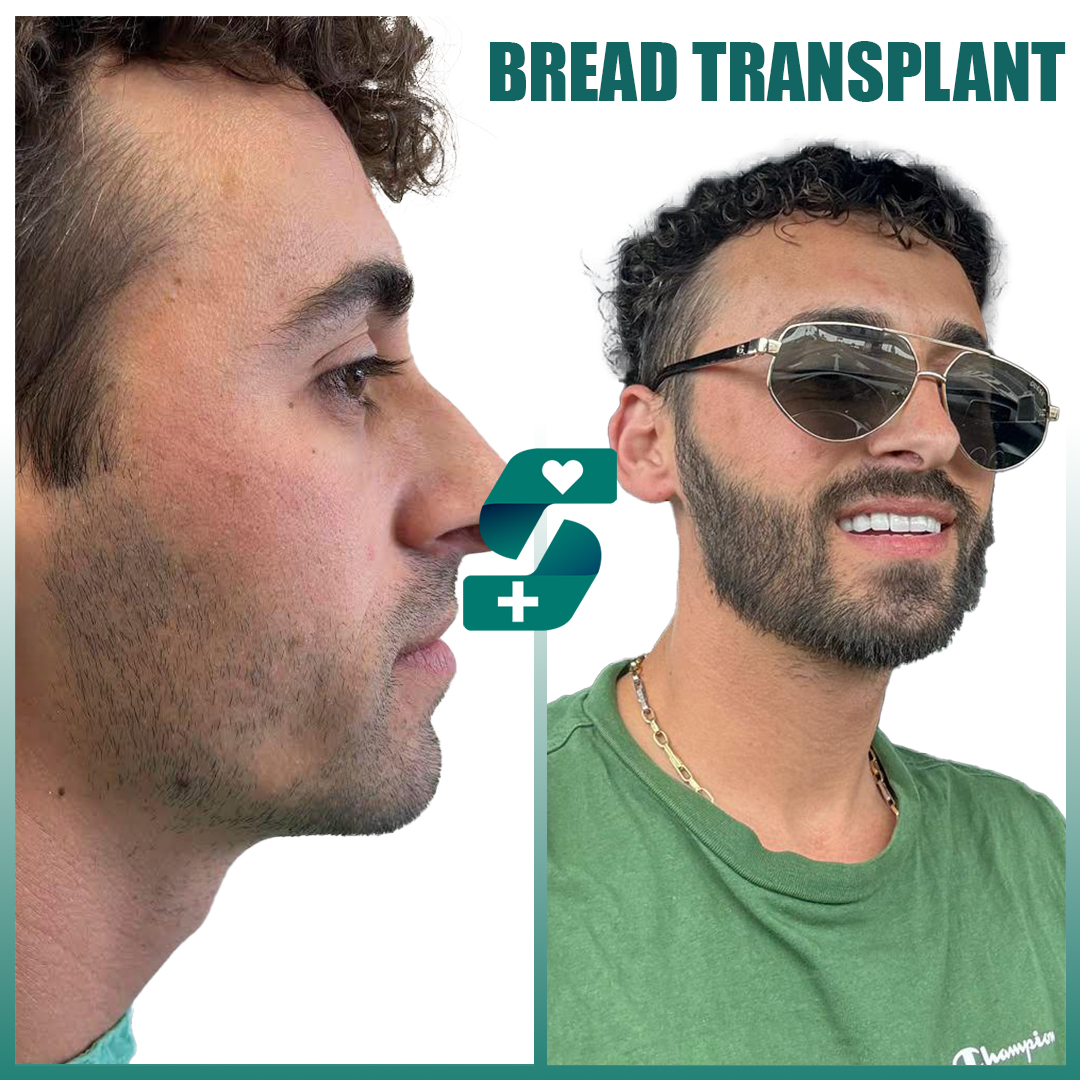
A beard transplant in Turkey moves hair follicles, usually from the back of the scalp, into thin or patchy areas of the beard, moustache or sideburns. It is done with FUE or DHI under local anesthesia and usually takes one day. Depending on the area, it needs from a few hundred to more than 2,000 grafts. The transplanted hairs often shed in the first 2 to 6 weeks, new growth starts after about 3 to 4 months, and the final result is seen after around 9 to 12 months. Once they have grown, the transplanted hairs are permanent. Every treatment plan at Soraca Med is reviewed by our plastic surgeon, Dr. Gökhan Bacak.
Beard Transplant at a Glance
| Item | Typical detail |
| Methods | FUE (follicular unit extraction) or DHI (direct hair implantation) |
| Donor area | Back of the scalp, sometimes hair from under the chin |
| Grafts | From a few hundred for small patches to 2,000 or more for a full beard |
| Anesthesia | Local anesthesia |
| Procedure time | Usually one day |
| Time in Antalya | About 2 to 3 days |
| Back to work | After about a week for most patients |
| Shaving | Usually after about 10 days, as your surgeon advises |
| Final result | Around 9 to 12 months |
| Price | Personal quote based on your graft plan |
Who Is a Beard Transplant For?
A beard transplant suits men who:
- Have a patchy or thin beard, moustache or sideburns
- Want to fill a gap, for example between the moustache and beard or on the cheeks
- Have scars in the beard area from injury, surgery or acne
- Have a healthy donor area on the back of the scalp
Before choosing surgery, it is worth knowing that minoxidil can increase beard growth for some men, but according to the International Society of Hair Restoration Surgery (ISHRS) its results are unpredictable and must be maintained. A transplant gives a permanent result in the areas that are treated.
FUE vs DHI Beard Transplant
| FUE | DHI | |
| How grafts are placed | Small channels are opened first, then grafts are placed | Grafts are implanted directly with a Choi implanter pen |
| Control over angle | Very good in experienced hands | Very precise control of angle and direction |
| Best for | Larger areas and higher graft numbers | Dense, detailed work such as moustache and beard lines |
| Recovery | Similar for both | Similar for both |
Your surgeon may combine both methods. Read more about sapphire FUE hair transplant and DHI hair transplant.
How a Beard Transplant Is Performed
- Planning: your surgeon designs the new beard line with you, including the cheek line, neck line and moustache, and estimates the number of grafts.
- Local anesthesia: the donor and recipient areas are numbed.
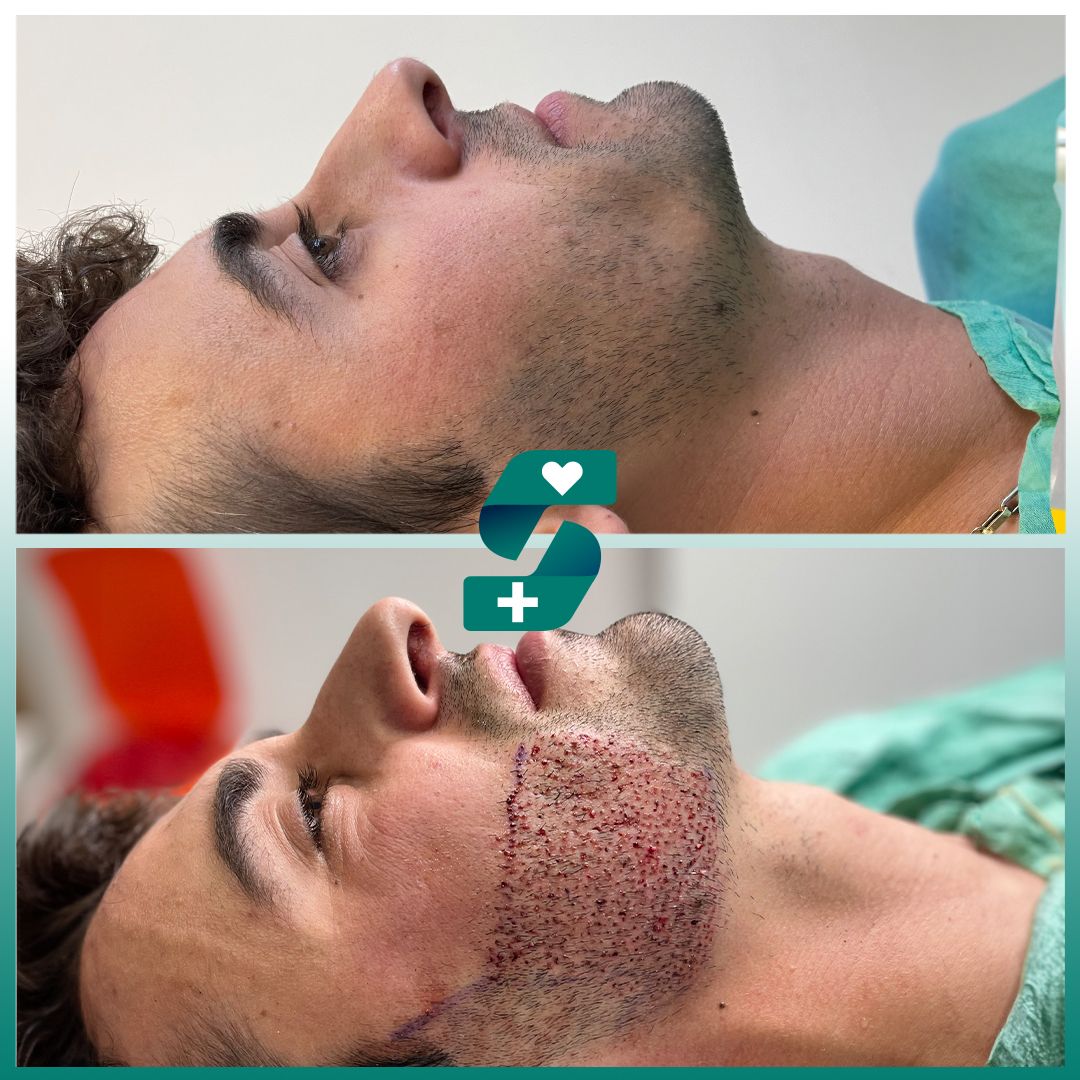
- Harvesting: follicles are taken one by one, usually from the back of the scalp, where hair is closest to beard hair in thickness. Hair from under the chin can also be used, and ISHRS notes that FUE is the only safe way to harvest beard hair.
- Implantation: each graft is placed at the correct angle and direction for its area of the face. This is the most important step for a natural result, because beard hair changes direction across the face.
- Aftercare instructions: you receive washing instructions, a care kit and a check-up the next day.
Recovery Day by Day
| Time after surgery | What to expect |
| Days 1 to 3 | Redness, small crusts and mild swelling of the face; sleep on your back |
| Days 4 to 10 | Crusts fall away with gentle washing; most patients return to work after about a week |
| Around day 10 | Shaving is often allowed again, as your surgeon advises |
| Weeks 2 to 6 | Transplanted hairs often shed; this is normal and the follicles remain |
| Months 3 to 4 | New hairs start to grow |
| Months 6 to 9 | Clear improvement in density |
| Months 9 to 12 | Final result for most patients |
For the first days, avoid touching or rubbing the grafts, saunas, swimming, heavy exercise and direct sun on the face. Do not smoke during healing, and follow your surgeon’s washing routine exactly.
Risks and Possible Problems
ISHRS lists the main problems after beard transplants as poor growth, hairs growing at an unnatural angle, an unnatural beard line and poorly matched hair colour or thickness. Other possible problems include infection, ingrown hairs or small cysts, and over-harvesting of the donor area. Most of these are avoided by careful planning, correct graft angles and a realistic number of grafts for your donor area.
How Long Do the Results Last?
Hair taken from the back of the scalp keeps its resistance to hair loss after it is moved, so the transplanted beard hairs normally grow for life once they have taken. You can trim, shave and style them like the rest of your beard.
Beard Transplant Cost in Turkey
The cost of a beard transplant depends on the number of grafts, the areas treated, such as cheeks, moustache, goatee or sideburns, and the method. At Soraca Med you receive a personal quote after we review photos of your beard and donor area, and your written quote confirms what is included. Many patients combine a beard transplant with a scalp hair transplant or an eyebrow transplant. Read more in our guide to beard hair transplant in Antalya, or contact us for a free consultation.
Frequently Asked Questions
How many grafts do I need for a beard transplant?
It depends on the area. Small patches may need a few hundred grafts, while a full beard can need 2,000 or more. Your surgeon calculates the number from your photos and donor area.
Is a beard transplant painful?
The procedure is done under local anesthesia, so you should not feel pain during it. Afterwards most patients only feel mild tenderness for a few days.
When can I shave after a beard transplant?
Most surgeons allow shaving after about ten days, once the crusts have gone. Follow the timing your surgeon gives you.
Why does my transplanted beard hair fall out after a few weeks?
Shedding in the first two to six weeks is normal. The follicles stay in the skin and start growing new hairs after about three to four months.
When will I see the final results of a beard transplant?
New growth usually starts after three to four months, and most patients see the final result after around nine to twelve months.
Are the results of a beard transplant permanent?
Yes. Once the transplanted hairs have taken and grown, they are normally permanent.
Will a beard transplant leave scars?
FUE leaves tiny dot-like marks in the donor area that are usually hidden by hair. The tiny openings in the beard area heal within days.
How long do I need to stay in Turkey for a beard transplant?
Most patients stay about two to three days, for the consultation, the procedure and a check-up and first wash the next day.
Sources and Medical Information
This guide is general patient information. The medical details are based on published patient guidance, including:
- ISHRS: Everything you need to know about a beard transplant
- ISHRS: A guide to hair transplant surgery
It does not replace a consultation: your surgeon decides what is safe for you, and their personal instructions always take priority. Last updated: October 2026.