
ReLEx SMILE (Small Incision Lenticule Extraction) is a laser eye surgery that corrects short-sightedness (myopia) and astigmatism without creating a corneal flap. A femtosecond laser shapes a thin disc of tissue (a lenticule) inside the cornea, and the surgeon removes it through a small incision of a few millimetres. Most people see well within a day or two, and because the surface of the cornea is barely disturbed, many studies report less dry eye than LASIK in the first months. Not everyone is a candidate: your prescription must be stable and suitable, and your corneas healthy and thick enough. This guide explains how SMILE works, who it suits, how it compares with LASIK and PRK, what recovery looks like and what affects the cost in Antalya. Your price is set in a personal quote after an eye examination.
ReLEx SMILE at a Glance
| Item | Typical detail |
| Corrects | Myopia (short-sightedness) and astigmatism |
| Technique | Femtosecond laser creates a lenticule removed through a small incision |
| Flap | No flap |
| Anesthesia | Numbing eye drops |
| Laser time | Usually well under a minute per eye |
| Total time in the clinic | Usually a few hours, including checks |
| Functional vision | Often within 1 to 2 days |
| Time in Antalya | Usually 3 to 5 days |
| Price | Personal quote after eye examination |
What Is ReLEx SMILE Eye Surgery?
The cornea is the clear front window of the eye. In short-sighted eyes, it focuses light too strongly. Laser eye surgery reshapes the cornea so that light focuses correctly on the retina. With LASIK, the surgeon lifts a flap and reshapes the tissue underneath with a second laser. With SMILE, a single laser creates a lens-shaped piece of tissue inside the intact cornea, and the surgeon removes it through a small opening. Removing the lenticule changes the shape of the cornea and corrects the prescription.
How Does ReLEx SMILE Work?
- Numbing drops are placed in the eye, and a speculum holds the lids open.
- The laser gently fixes the eye and creates the lenticule and a small incision inside the cornea.
- The surgeon separates and removes the lenticule through the small incision.
- The eye is checked, and protective drops are applied.
- You rest for a short time before going back to your hotel.
You stay awake throughout. Most patients feel pressure but no pain.
ReLEx SMILE vs LASIK vs PRK: Key Differences

| ReLEx SMILE | LASIK | PRK / surface laser | |
| Flap | No flap; small incision | Corneal flap | No flap; surface layer removed |
| Lasers | Femtosecond laser only | Femtosecond plus excimer laser | Excimer laser |
| Recovery | Fast; often good vision in 1 to 2 days | Fast; often good vision next day | Slower; several days of discomfort |
| Dry eye | Often less than LASIK early on | Common in the first months | Common while the surface heals |
| Treats | Myopia and astigmatism | Myopia, astigmatism, hyperopia | Myopia, astigmatism, hyperopia |
| Contact sports | No flap to dislodge | Small long-term flap risk | No flap |
| Enhancement | Possible but more complex | Usually straightforward | Possible |
LASIK and PRK can still be the better choice in some cases, for example for long-sightedness or certain prescriptions. Read about LASIK eye surgery and the ReLEx SMILE treatment.
Who Is a Good Candidate for ReLEx SMILE?
- Adults with a stable glasses or contact lens prescription, usually for at least a year
- Short-sightedness and astigmatism within the treatable range
- Healthy corneas of sufficient thickness on scans
- No active eye disease, such as keratoconus, uncontrolled dry eye or uncontrolled glaucoma
- Not pregnant or breastfeeding, as hormones can change the prescription
- Realistic expectations about reading glasses later in life
SMILE does not stop age-related reading problems (presbyopia), which usually start in your forties. If you are over about 45, your surgeon may discuss other options.
The Eye Examination Before SMILE
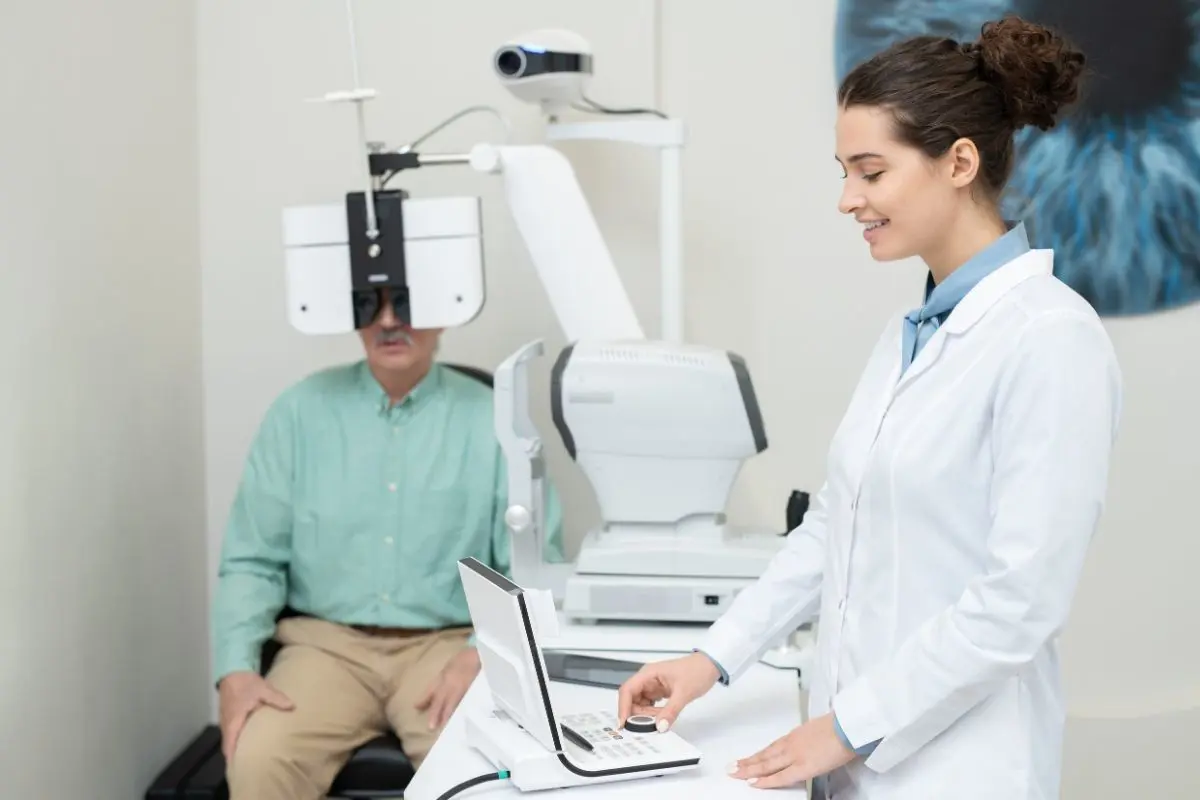
A detailed examination is the most important step. It usually includes:
- Measurement of your prescription with and without dilating drops
- Corneal topography and tomography to map the shape and thickness
- Pupil size, tear film and dry eye assessment
- Eye pressure and a check of the retina
Stop wearing soft contact lenses for several days, and hard lenses for longer, before the examination, as your clinic advises. Lenses can temporarily change the shape of the cornea.
Benefits of ReLEx SMILE Eye Surgery
- No flap, so no flap-related complications
- A small incision that preserves more of the corneal surface nerves
- Often less dry eye in the early months than LASIK
- Fast visual recovery for most patients
- Suitable for people with active lifestyles and contact sports
Risks and Considerations
All laser eye surgery carries risks. The US Food and Drug Administration (FDA) advises patients to understand possible side effects before surgery. For SMILE they include:
- Dry eye, usually temporary
- Glare, halos or starbursts around lights, especially at night, usually improving over months
- Under- or over-correction, sometimes needing glasses or an enhancement
- Slower visual recovery in some patients compared with LASIK
- Rare infection or inflammation
- Rarely, weakening of the cornea (ectasia) in eyes that were not suitable
A careful examination and choosing SMILE only when your eyes are suitable are the best protection.
ReLEx SMILE Recovery Time
| Time after surgery | What to expect |
| First hours | Watery eyes, light sensitivity, blurred vision |
| Day 1 | Check-up; many people see well enough for daily tasks |
| Days 2 to 7 | Vision continues to sharpen; use drops as prescribed |
| Weeks 1 to 4 | Most people return to screens, work and light exercise |
| Months 1 to 3 | Vision stabilises; night glare usually reduces |
Use your eye drops exactly as prescribed, avoid rubbing your eyes, wear the protective shields at night if given, avoid eye make-up for about a week, and avoid swimming, hot tubs and dusty environments until your doctor allows. Many people can return to desk work within a few days.
SMILE Laser Eye Surgery Step-by-Step Journey in Antalya
| Day | What happens |
| Day 1 | Arrival in Antalya and transfer to your hotel |
| Day 2 | Detailed eye examination and scans; surgery the same or next day if suitable |
| Day 3 | Surgery or the first check-up |
| Days 4 to 5 | Follow-up check and flight home when cleared |
ReLEx SMILE Cost in Antalya vs Europe
SMILE uses specialised femtosecond laser technology, so it is usually priced above standard LASIK in most countries. In the UK and much of Western Europe, laser eye surgery prices are commonly quoted per eye and can be high for SMILE. In Antalya, the treatment is usually more affordable, especially with hotel and transfers arranged as a package. At Soraca Med, your price is confirmed after your eye examination, because suitability and the correct procedure must be established first.
What’s Included in ReLEx SMILE Packages in Turkey?
- Pre-operative eye examination and scans
- The ReLEx SMILE procedure for both eyes, if suitable
- Eye drops and protective shields
- Post-operative check-ups in Antalya
- Hotel accommodation and VIP transfers, arranged in packages
- Advice for follow-up checks at home
Why Choose Antalya for Refractive Surgery?
Antalya combines modern eye clinics with direct flights from many European airports and a short airport transfer. A three to five day stay is enough for the examination, the procedure and the first checks. After surgery, remember to wear sunglasses and avoid sea and pool water until your doctor says otherwise.
Is Refractive Surgery in Turkey Safe?
It can be very safe when performed by experienced eye surgeons with proper screening. The most important question is not where the surgery is done, but whether a full examination confirmed that your eyes are suitable. Be cautious of any clinic that books you for surgery without corneal scans, or that promises a perfect result for everyone.
Which Vision Correction Is Right for You?
| Your situation | Options often discussed |
| Short-sightedness with or without astigmatism, healthy corneas | ReLEx SMILE, LASIK, PRK |
| Long-sightedness (hyperopia) | LASIK or PRK in many clinics |
| Thin corneas | PRK, or lens-based options |
| Very high prescriptions | Implantable contact lenses (ICL) or lens replacement |
| Over about 45 with reading problems | Lens-based options or monovision, discussed individually |
| Active contact sports or military work | SMILE or PRK, because there is no flap |
The best option is the one that suits your eyes, prescription and lifestyle, after a full examination.
Myths and Facts About Laser Eye Surgery
| Myth | Fact |
| “Laser eye surgery is painful.” | Numbing drops are used; most people feel pressure rather than pain. |
| “SMILE works for everyone.” | Your prescription and corneas must be suitable. |
| “You will never need glasses again.” | Most people are free of glasses for distance, but reading glasses are usually needed with age. |
| “Results wear off quickly.” | The correction is stable for most people, although the eye can change slowly over many years. |
| “Dry eye is permanent.” | Dry eye after surgery is usually temporary and treated with drops. |
Preparing for Your Examination and Surgery
- Stop wearing soft contact lenses for several days, and hard lenses for longer, before your examination, as advised
- Bring your current glasses and any previous eye reports
- Tell the doctor about eye conditions, autoimmune diseases and medicines
- Do not wear eye make-up, perfume or face cream on the day of surgery
- Arrange for someone to accompany you after surgery, as you should not drive that day
Your Stay in Antalya Day by Day
| Day | What usually happens |
| Day 1 | Arrival and transfer to your hotel |
| Day 2 | Full eye examination and scans; surgery if suitable |
| Day 3 | First check-up |
| Days 4 to 5 | Rest, eye drops and final check before your flight |
Life After SMILE
Most people notice a big change in daily life: waking up and seeing clearly, swimming and sport without glasses or lenses, and no more lens solutions. Keep using drops as prescribed, protect your eyes from dust and strong sun, and have regular eye checks at home, as you would for any healthy eye.
Our Google Reviews
Our Bookimed Reviews
Frequently Asked Questions
What is ReLEx SMILE?
It is laser eye surgery that corrects short-sightedness and astigmatism by removing a thin disc of tissue from inside the cornea through a small incision, without creating a flap.
Is SMILE better than LASIK?
Neither is better for everyone. SMILE has no flap and often less early dry eye. LASIK treats a wider range of prescriptions, including long-sightedness.
Does ReLEx SMILE hurt?
Numbing drops are used, so most people feel pressure but no pain. The eyes may sting or water for a few hours afterwards.
How soon can I see after SMILE?
Many people see well enough for daily tasks within one to two days, with vision continuing to sharpen over weeks.
How long do I need to stay in Antalya?
Usually three to five days for the examination, surgery and first check-ups.
Who cannot have SMILE?
People with unstable prescriptions, thin or irregular corneas, keratoconus, some eye diseases, or prescriptions outside the treatable range.
How much does ReLEx SMILE cost in Antalya?
The price is confirmed after your eye examination. It is usually higher than standard LASIK because of the specialised laser.
Will I still need reading glasses?
SMILE does not prevent age-related reading problems, which usually start in your forties.
Can I have SMILE if I have long-sightedness?
SMILE is mainly used for short-sightedness and astigmatism. Long-sightedness is often treated with LASIK or PRK.
Can I drive after SMILE?
Not on the day of surgery. Most people can drive once their vision meets the legal standard, often within days, after the doctor confirms it.
Is SMILE suitable if I do contact sports?
Often yes, because there is no corneal flap that could be dislodged.
How long do I need to stop contact lenses before the examination?
Usually several days for soft lenses and longer for hard lenses. Your clinic gives exact advice.
Sources and Medical Information
This guide is general patient information. The medical details are based on published patient guidance, including:
- American Academy of Ophthalmology: What is SMILE surgery?
- FDA: What should I expect before, during and after laser eye surgery?
It does not replace an eye examination: your eye surgeon decides which treatment is safe for you, and their personal instructions always take priority. Last updated: October 2026.